The OCOS™ Framework
No serious outdoor expedition begins on the trail.
A successful expedition always starts with meticulous planning.
At Outdoor Consultant, every trip is designed using a systematic methodology we call:
OCOS™ – Outdoor Consultant Operating System
OCOS™ is an operational system used to plan, analyze, and manage outdoor activities professionally.
Through this approach, every adventure activity is designed to be:
• measurable
• systematic
• realistic
• risk-responsible
This methodology ensures that every expedition focuses not only on achieving the trip’s objectives but also on safety and sustainability.
OCOS™ System Structure
OCOS™ is designed as a system that integrates four key disciplines in outdoor expedition planning.
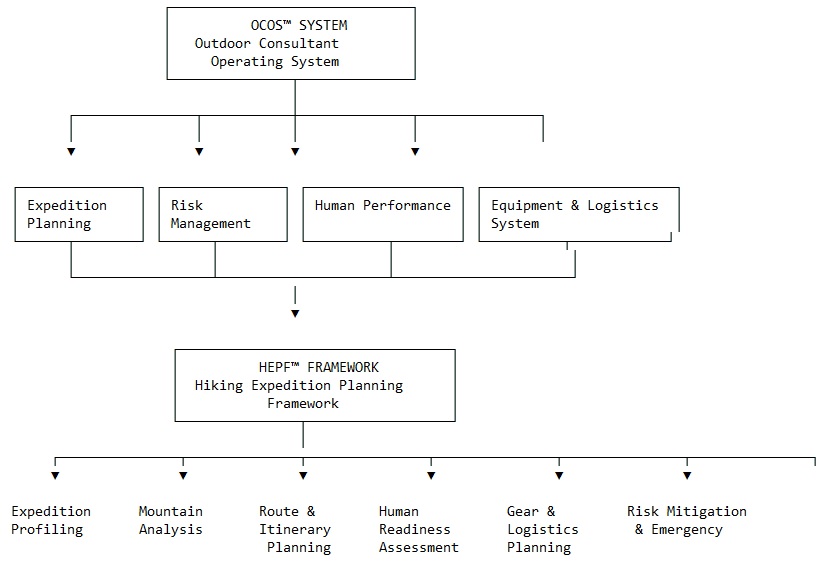
Through this structure, OCOS™ integrates expedition planning, risk management, and human capability development into a single planning system.
Pillars of the OCOS™ System
OCOS™ is built upon several key pillars that serve as the foundation for the expedition consultancy process.
1. Expedition Planning
Expedition planning lies at the heart of every mountain journey.
This stage involves analyzing various aspects of the trip, such as:
- mountain characteristics analysis
- itinerary development
- summit strategy
- trip logistics management
The primary goal of this process is to transform the expedition concept into a realistic and actionable plan.
2. Risk Management
Every outdoor activity carries unavoidable risks.
In the OCOS™ system, risk is analyzed through a systematic approach that includes:
- hazard identification
- risk level evaluation
- risk mitigation strategies
- emergency evacuation planning
This approach does not aim to eliminate risk entirely, but rather to manage it professionally and responsibly.
3. Human Performance
An expedition’s success is determined not only by mountain conditions but also by the capabilities of the people undertaking the journey.
In OCOS™, this aspect encompasses the evaluation of:
- physical readiness
- energy management
- mental resilience
- decision-making skills in extreme environments
A strong climber is defined not just by physical strength, but also by the ability to think and make decisions under challenging conditions.
4. Equipment & Logistics System
Equipment and logistics are crucial factors in expedition efficiency.
In the OCOS™ system, this aspect involves analyzing:
- equipment systems
- team load distribution
- meal planning
- water management
- logistics system efficiency
The objective is to create an expedition system that is efficient, lightweight, and tailored to the specific needs of the journey.
HEPF™ – Hiking Expedition Planning Framework
As part of the OCOS™ system, the Outdoor Consultant employs the HEPF™ (Hiking Expedition Planning Framework) as the operational framework for the consulting process.
This framework divides the expedition planning process into six analytical phases.
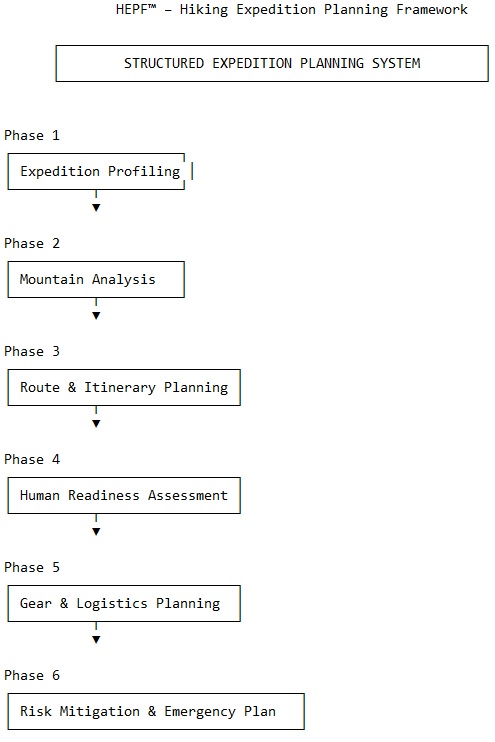
Phase 1 — Objective & Expedition Profiling
The first phase involves understanding the client’s objectives and profile.
Discussions cover:
- climbing objectives
- prior climbing experience
- general physical condition
- team composition
- desired trip duration
Key outputs of this phase are:
- expedition profile
- climbing team profile
Phase 2 — Mountain & Route Analysis
This phase focuses on analyzing the characteristics of the mountain to be climbed.
Parameters analyzed include:
- mountain altitude
- elevation gain
- route length
- terrain characteristics
- weather patterns
- potential objective risks
This analysis can be integrated with the SPKGI Difficulty Analysis method.
Outputs of this phase are:
- difficulty profile
- risk profile
Phase 3 — Route & Itinerary Planning
A realistic itinerary is developed during this phase.
Analysis covers:
- climbing day breakdown
- campsite locations
- summit strategy
- cut-off times
- descent plan
Key outputs are:
- expedition itinerary
- trip timeline
Phase 4 — Human Readiness Assessment
This phase evaluates the physical readiness of expedition participants.
Parameters analyzed include:
- endurance
- stamina
- muscle strength
- recovery capacity
If necessary, a 4–12 week training program will be designed prior to the expedition.
Outputs:
- fitness readiness level
- training recommendation
Phase 5 — Equipment & Logistics Planning
This phase analyzes the equipment systems used for the expedition.
Systems analyzed include:
- clothing system
- shelter system
- cooking system
- load distribution
- meal planning
- water management
Outputs:
- gear checklist
- logistics plan
Phase 6 — Risk Mitigation & Emergency Planning
The final phase is the most crucial one. An analysis is conducted regarding various potential risks, such as:
- extreme weather
- terrain-related risks
- injuries
- navigation errors
This stage also involves the development of:
- emergency scenarios
- evacuation strategies
Outputs:
- risk management plan
- emergency action plan
Analysis Tools within the OCOS™ System
To support the consultation process, the Outdoor Consultant utilizes several additional analysis tools.
Adventure Risk Matrix™
The Adventure Risk Matrix™ is used to evaluate the risk level of outdoor activities based on two primary parameters:
- Probability (likelihood of occurrence)
- Impact (consequences if it occurs)
This method helps objectively identify risk levels prior to the expedition.
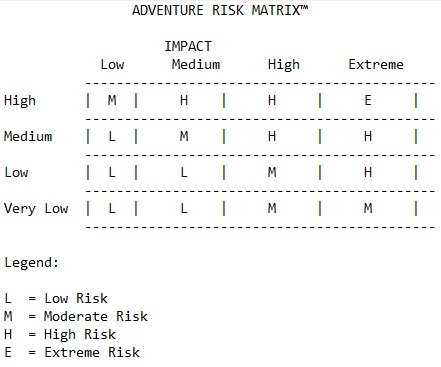
Parameters analyzed:
Probability
- Very Low
- Low
- Medium
- High
Impact
- Low
- Medium
- High
- Extreme
This matrix is used to evaluate risks such as:
- extreme weather
- long fall terrain
- rockfall
- altitude sickness
- navigational error
SPKGI Difficulty Analysis
SPKGI is an indicator-based system for rating mountain difficulty levels.
This method utilizes 11 analytical indicators, such as:
- elevation gain
- route length
- terrain characteristics
- weather conditions
- logistics
- evacuation access, and others.
The analysis yields a difficulty score and grade, helping clients understand the level of challenge involved in the trip.
Client Deliverables
Through the OCOS™ consultation process, clients receive various expedition planning documents, such as:
- Expedition Profile
- Expedition Itinerary
- Gear Planning Sheet
- Logistics Plan
- Training Recommendation
- Risk Assessment
- Emergency Action Plan
These documents assist clients in preparing for their trips using a more systematic and professional approach.
Why Indonesia Mountain & Nature Consultant are different?
Indonesia Mountain & Nature Consultant is not a trip organizer.
We act as consultants for outdoor expedition planning.
Through the OCOS™ system, we help clients plan their trips using:
- an analytical approach
- systematic planning
- professional risk management
- realistic recommendations
This approach distinguishes Outdoor Consultant from typical outdoor service providers, as we focus on expedition consulting and strategic planning.